
Welcome to UK History News. In each fortnightly issue, free subscribers will receive the latest British history-related headlines, along with notable upcoming anniversaries. And below the paywall, paid subscribers will see many more news items, all of them briefly summarised here in one place.
Top headlines
Criminal review – homelessness show delivers a rage-making punch in the gut [The Guardian]: At London’s Museum of Homelessness, the largely alfresco exhibition ‘Criminal: An Untold Story of Homelessness, Resistance and Survival’ uses installations, art and infographics to trace 400 years of the criminalisation and marginalisation of homeless and nomadic communities – from the 1530 Egyptians Act and 1824 Vagrancy Act to recent anti‑encampment laws – exposing media scapegoating and policy harms while showcasing grassroots resistance and alternatives to law‑enforcement responses.
Medieval King Arthur manuscript could fetch £2m at auction [The Guardian]: A richly illuminated manuscript dating from c.1290–1310 that contains early Lancelot‑Grail texts, 126 miniatures (including a rare image of Merlin as a stag) and a unique reworking of the Merlin ending has remained in private hands for over 700 years and will be offered at Christie’s in July with an estimate of £1.5–2m, raising hopes it may enter a public collection for scholarly study.
Rechalking beloved Cerne Giant is a sticky process – and climate crisis is making it worse [The Guardian]: Volunteers led by the National Trust are re‑chalking Dorset’s 55‑metre Cerne Giant – using a new chalk‑and‑water paste and heat‑aware shifts – after warmer, wetter conditions and algae and runoff attributed to climate change have dulled and eroded the ancient (likely late‑Saxon) figure, prompting more frequent maintenance and a recent fundraising purchase of surrounding land.
Blue plaque unveiled for ‘first’ royal photographer [BBC News]: A blue plaque will be unveiled at 57 Marine Parade in Brighton to honor Victorian photographer William Constable – who opened the city’s first portrait studio in 1841 and is believed to have taken the first royal photographic portrait of Prince Albert – after researchers from the University of Brighton and the Smithsonian, aided by his descendant Claire Constable, uncovered around 130 surviving Constable daguerreotypes.
Future of first Bramley apple tree in doubt as cottage where it stands is sold [The Guardian]: Campaigners hoping to buy the garden containing the more-than-200-year-old ‘Mother Bramley’ – the original tree from which the Bramley cooking apple was propagated – were left ‘gobsmacked’ after Nottingham Trent University sold the plot to neighbouring owners despite a £14,000 crowdfund, with NTU saying it has placed obligations on the sale and will support the new custodians to care for the tree and maintain some public access.
The hedge that hid 3,000 ancient silver coins [BBC News]: During hedge work at Chancton Farm in 1866, labourers uncovered an earthenware pot containing about 3,000 Anglo‑Saxon silver pennies – minted under Edward the Confessor and Harold II and none later than 1066 – later declared treasure trove (most sent to the British Museum, some sold into private and international collections), a hoard worth £12.10 (over three times the manor’s Domesday value) that likely dates to the Norman invasion and helped confirm Steyning as an active mint.
‘Written off’ Welsh cave art may be the oldest in Britain [Times History]: Analysis suggests red marks in Bacon Hole on the Gower Peninsula, long dismissed as natural stains, were made by humans more than 17,000 years ago
Somerset detectorist strikes gold with ‘spectacular’ Roman ring find [The Guardian]: A rare, unusually large 48g late-Roman gold ring engraved with the goddess Victoria – discovered by detectorist Kevin Minto near Ilminster alongside a hoard of 297 coins – has been acquired by the South West Heritage Trust for £78,000 to remain in Somerset and go on display at the Museum of Somerset.
Stonehenge mystery may be explained by forgotten land [BBC News]: New research suggests Stonehenge’s six‑tonne ‘altar stone’ originated in the Orcadian Basin of northeast Scotland, was carried partway by glaciers to Doggerland (the now‑submerged land bridge in the North Sea) and then deliberately moved hundreds of kilometres by people to Salisbury Plain – possibly driven by climate‑induced migration at the end of the last Ice Age, researchers report in the Journal of Quaternary Science.
Prime minister announces £3m for National Railway Museum project [BBC]: Prime Minister Sir Keir Starmer announced £3m in extra government funding for the National Railway Museum’s Central Hall – inspired by historic locomotive roundhouses – to help cover higher costs from stopping-up Leeman Road, unlock the project (building on a prior £15m commitment), sign contracts imminently and begin construction next month as part of the wider York Central regeneration to boost visitor numbers and local growth.
Pupils amazed by Tudor tunnels under their school [BBC News]: Students at New Hall School in Chelmsford – built on the grounds of Henry VIII’s Tudor Palace of Beaulieu – say they are inspired after workers repairing a ha-ha uncovered possible Tudor-era tunnels containing pottery, bones and glass bottles, prompting staff to call in experts to investigate.
Notable anniversaries coming up
8 June
250 years ago... 1776: birth of Thomas Rickman, English architect and architectural antiquary (died 1841)
650 years ago... 1376: death of Edward, the Black Prince, English son of Edward III of England (born 1330)
525 years ago... 1501: death of George Gordon, 2nd Earl of Huntly, Earl of Huntly and Lord Chancellor of Scotland (born 1440)
11 June
125 years ago... 1901: The boundaries of the Colony of New Zealand are extended by the UK to include the Cook Islands.
90 years ago... 1936: The London International Surrealist Exhibition opens.
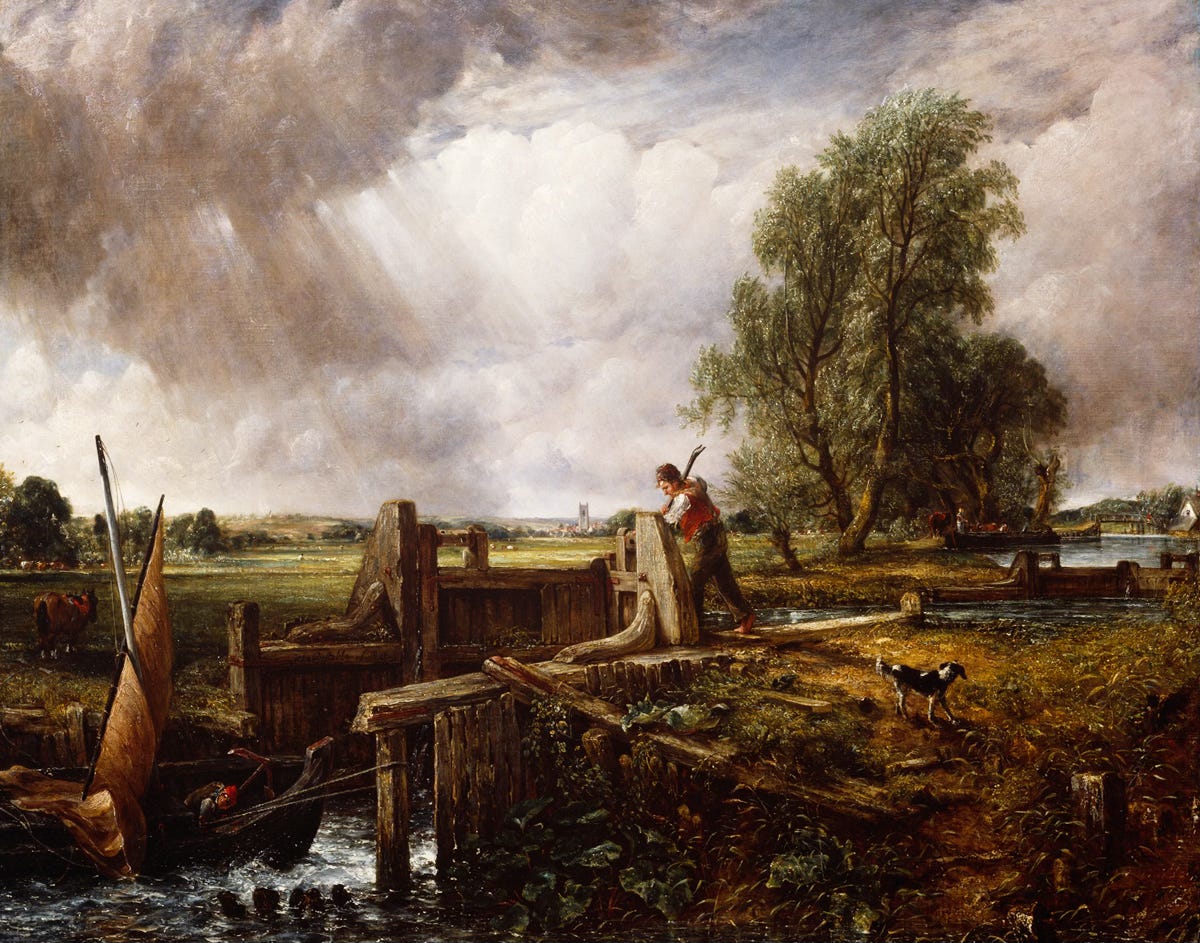
250 years ago... 1776: birth of John Constable, English painter and academic (died 1837)
12 June
175 years ago... 1851: birth of Oliver Lodge, English physicist and academic (died 1940)
13 June
150 years ago... 1876: birth of William Sealy Gosset, English chemist and statistician (died 1937)
14 June
300 years ago... 1726: birth of Thomas Pennant, Welsh ornithologist and historian (died 1798)
19 June
175 years ago... 1851: birth of Silvanus P. Thompson, English physicist, engineer, and academic (died 1916)
150 years ago... 1876: birth of Nigel Gresley, Scottish-English engineer (died 1941)
Article to read
The Australian helping to return stolen English church artefacts [BBC News]: From Sydney, 80-year-old solicitor and heraldry enthusiast Richard d’Apice spotted two stolen church artefacts for sale online – a 17th-century memorial panel from St Leonard’s, Flamstead, and a funeral hatchment from St Margaret’s, Felbrigg – alerted the churches and authorities, and helped secure their withdrawal from auction and return to their rightful English churches.
⭐️ Paying subscribers can read 21 further news stories below, from general history news to museum updates and exhibitions
Plus, if you’re into archaeology, folklore and landscape stories, read my other, free newsletter…

