
Welcome to UK History News. In each fortnightly issue, free subscribers will receive the latest British history-related headlines, along with notable upcoming anniversaries. And below the paywall, paid subscribers will see many more news items, all of them briefly summarised here in one place.
Top headlines
New book explains how the Victorian media and public effectively constructed the enduring myth of Jack the Ripper [Heritage Hunter]. Yours Truly Jack the Ripper argues that sensationalist newspaper coverage, lurid storytelling, and the publication of dubious letters (like the infamous ‘Dear Boss’ letter) exaggerated the killer’s persona into a mysterious, almost mythical figure, while also shaping public fear and fascination.
EXCLUSIVE! UK History News readers can get 25% off the book here:
Future of William Wordsworth’s Lake District home secured for the public [The Guardian]: Rydal Mount and Gardens, William Wordsworth’s longtime home that had been marketed for over £2.5m after falling visitor numbers made the museum unsustainable, has been acquired by the Wordsworth Trust, which will preserve the house and gardens, keep them open to the public after a short maintenance closure, and integrate the site with its Dove Cottage archives.
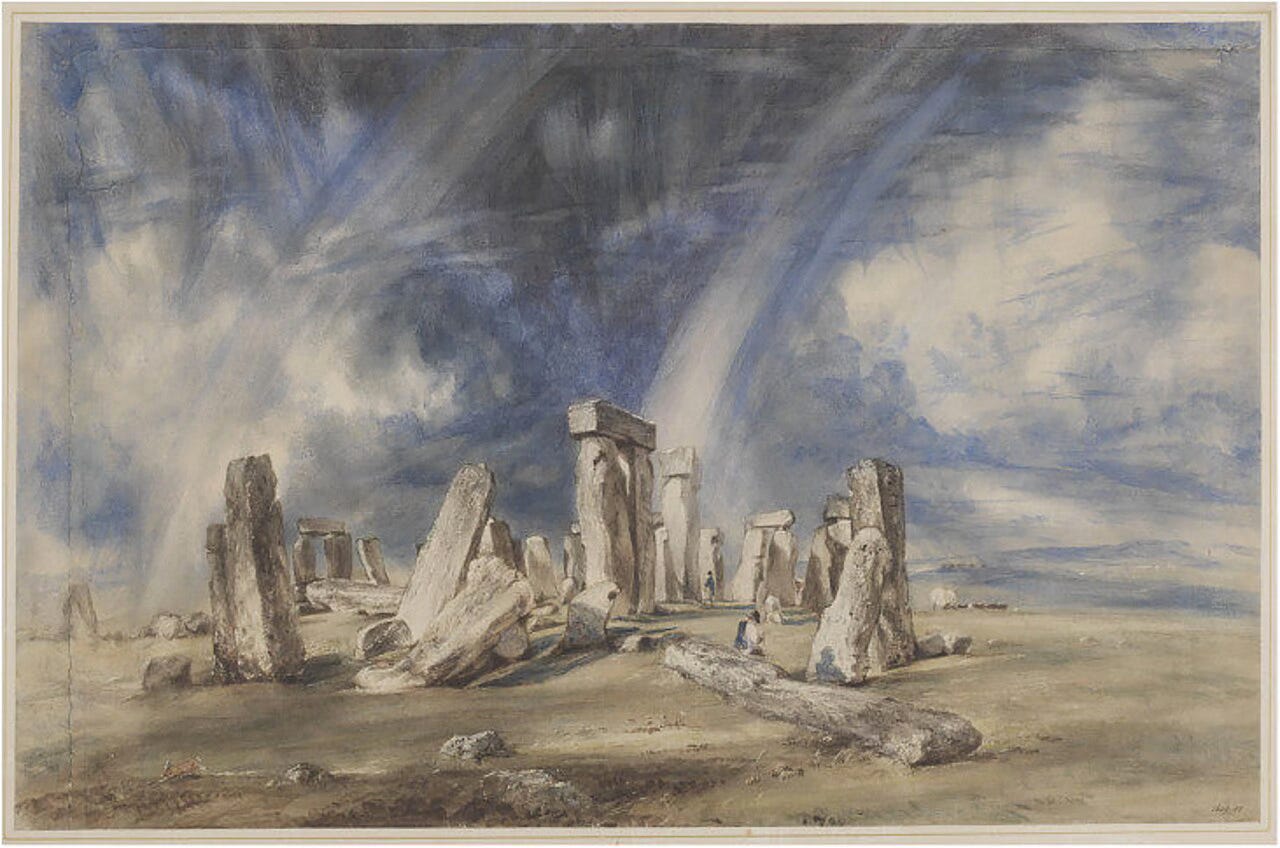
Stonehenge tunnel plan officially scrapped after years of protests [The Guardian]: The Department for Transport has revoked the development consent for the controversial Stonehenge traffic tunnel, northern bypass and junctions – officially scrapping a plan opposed by campaigners since 1994 after £179.2m had been spent and projected costs rose to about £1.4bn – saying it no longer fits strategic policy while critics call for public‑transport investment and some local officials warn of unresolved congestion.
Bird’s-eye view of London seen in 280-year-old map [BBC News]: John Rocque’s remarkably detailed 1746 bird’s-eye map of London – showing the city’s streets, outskirts, a population of about 650,000 and surviving buildings – has been republished 280 years after its first printing in the book London in the 18th Century, with English Heritage historian Steven Brindle praising its accuracy as ‘almost miraculous’ given Rocque’s basic survey tools.
The local roots of iconic Brief Encounter clock [BBC News]: The iconic clock made famous by the 1945 film Brief Encounter has been restored and rehung at Carnforth station after removal in 2020 – the 1895 timepiece was manufactured by JB Joyce & Co of Whitchurch, Shropshire, a clockmaking firm with roots back to 1690 now preserved by Smith of Derby, and its return was marked by a ceremony attended by the niece of star Celia Johnson.
Famous car to blast down Welsh beach in front of onlookers [Wales Online]: Legendary land-speed car ‘Babs,’ which J.G. Parry‑Thomas drove to a 1926 world record, will return to Pendine Sands on April 27 for a centenary celebration featuring two high-speed demonstration runs and the Museum of Land Speed’s new Project Lab.
Mary Anning ‘sick of fossils’ letter bought by museum for £15,000 [BBC]: A rare handwritten fragment by 19th-century fossil hunter Mary Anning – in which she says she is ‘sick’ of fossils – sold for £15,360 at Bonhams after Lyme Regis Museum won a crowdfunding-backed bid and plans to display the scarce relic, underscoring Anning’s pivotal but often uncredited role in shaping modern understanding of prehistoric life.
Ministers consider charging tourists to enter national museums in England [The Guardian]: The government, responding to the Arts Council England review, said it will explore long‑term funding options for the struggling arts sector – including a proposed tourist/hotel levy on international visitors to national museums – alongside measures such as £8m to simplify grant processes, targeted funds for under‑represented creatives and regional investment, a plan praised by some as subsidising free museum access but criticised by others as a bad idea.
No plans to charge overseas visitors at National Maritime Museum [The Greenwich Wire]: Royal Museums Greenwich – which runs the National Maritime Museum, Cutty Sark, Queen’s House and Royal Observatory (visited by more than two million people a year) – says it will not charge overseas visitors, despite culture secretary Lisa Nandy announcing the government will explore reintroducing international admission fees (scrapped in 2001) to raise funds, a move museum leaders oppose – arguing it would impose staffing and ID-check costs and that a tourist levy would be a better alternative.
Dogs became man’s best friend far earlier than thought, scientists find [BBC News]: DNA analysis of a small jawbone from Gough’s Cave in Somerset shows it belonged to a domesticated dog living closely with humans 15,000 years ago – pushing back dog domestication by about 5,000 years – and, alongside broader ancient-DNA studies, reveals an early, widely dispersed dog population with shared diets and dual ancestry that contributed to modern dogs.
Book dubbed ‘the work of angels’ may have been made in the Highlands [BBC News]: Researchers now suggest the 1,200-year-old illuminated Book of Kells may have been made by medieval monks at a vellum workshop in Portmahomack, Easter Ross – not Iona – and have funded an experimental archaeology project to reconstruct the site’s hide-soaking tank and reproduce parchment using seaweed lye so the samples can be compared with the original manuscript, with results due in late 2026.
Punk masks, Walkmans and Choppers: Museum of Youth Culture to open in London [The Guardian]: Opening 15 May in a Camden basement, the new Museum of Youth Culture – built from Jon Swinstead’s 100,000‑item archive and community donations – will celebrate British youth subcultures from mods and rockers to rave, grime and emo, double as an events space (including a Rough Trade shop and youth club), and aims, with National Lottery and foundation backing and a 20‑year lease, to fill a long‑standing gap in UK cultural institutions devoted to the teenage years.
Visit V&A East Museum [Victoria and Albert Museum]: V&A East Museum, a co‑created five‑floor institution in Queen Elizabeth Olympic Park celebrating east London’s heritage and contemporary creative voices, opens on 18 April 2026 with over 500 objects and the landmark exhibition ‘The Music is Black’ tracing Black British music (some exhibitions/events carry separate charges) and features amenities including a Jikoni café.
Neolithic trackway discovered by archaeologists [BBC News]: Archaeologists from Wessex Archaeology, working with the Somerset Wildlife Trust and Species Survival Fund, have uncovered a 6,000‑year‑old Neolithic birchwood pole-and-brushwood trackway beneath deep peat at Honeygar Farm on the Somerset Levels – dating to about 3,770–3,640 BC, preserving pollen, plant and insect remains that reveal millennia of climate and human activity and helping inform both archaeological knowledge and plans to restore the ancient wetland habitat.
‘A fascinating discovery’: research challenges Battle of Hastings narrative [Heritage | The Guardian]: Medievalist Tom Licence argues that King Harold did not undertake the famous exhausting march north and back in 1066 but instead kept and used his fleet to sail his forces – claiming a misreading of the Anglo-Saxon Chronicle created the long-held belief that his navy had been disbanded and that the forced march helped cause his defeat at Hastings.
Constable legacy to be honoured in three exhibitions [BBC News]: The first of three ‘Constable 250’ exhibitions opens at Christchurch Mansion in Ipswich on 28 March (running to 14 June), assembling more than 100 artworks and personal objects – including Maria Constable’s wedding ring, Constable’s paint box and, for the first time in the county it depicts, The Hay Wain – alongside immersive Regency-era recreations to mark the 250th anniversary of the Suffolk-born painter.
Notable anniversaries coming up
31 March
60 years ago... 1966: The Labour Party under Harold Wilson wins the 1966 United Kingdom general election.
100 years ago... 1926: birth of John Fowles, English novelist (died 2005)
3 April
125 years ago... 1901: death of Richard D’Oyly Carte, English composer and talent agent, impresario for Gilbert and Sullivan (born 1844)
6 April
100 years ago... 1926: birth of Ian Paisley, Northern Irish evangelical minister and politician, 2nd First Minister of Northern Ireland (died 2014)
350 years ago... 1676: death of John Winthrop the Younger, English politician, 1st Governor of Connecticut (born 1606)
7 April
50 years ago... 1976: Member of Parliament and suspected spy John Stonehouse resigns from the Labour Party after being arrested for faking his own death.
9 April
400 years ago... 1626: death of Francis Bacon, English philosopher, scientist, jurist and politician, Attorney General for England and Wales (born 1561)
11 April
75 years ago... 1951: The Stone of Scone, the stone upon which Scottish monarchs were traditionally crowned, is found on the site of the altar of Arbroath Abbey. It had been taken by Scottish nationalist students from its place in Westminster Abbey.
Articles to read
Village at the heart of the race for longitude [BBC News]: Carpenter-clockmaker John Harrison, who died 250 years ago in March 1776, revolutionized navigation by inventing the marine chronometer – which solved the age-old longitude problem – and other key innovations like the bimetallic strip and caged roller bearing, ultimately winning (after a protracted dispute) the Board of Longitude prize, inspiring a plotline in Only Fools and Horses, and recently being commemorated with a plaque in his childhood village of Barrow-on-Humber.
The pioneering coffee house serving since 1645 [BBC News]: Queen’s Lane Coffee House in Oxford, opened in 1654 and arguably Europe’s oldest continuously used coffee house after being founded by Jewish businessman Cirques Jobson during the Cromwell era, served as a ‘penny university’ and hub for Enlightenment ideas and is still operating today under a Turkish family.
Experience: I’ve spent decades collecting over 260 postboxes [The Guardian]: After rescuing a vandalised Victorian postbox in 1994, an Isle of Wight railway enthusiast has built one of Britain’s largest collections – now a museum of 260 historic postboxes from across the UK, Ireland and Hong Kong, amassed through contacts, donations and fieldwork – while lamenting Royal Mail’s removal and modernization of boxes and worrying about the collection’s future.
The tornado that swept a carpenter to his death [BBC News]: On 24 March 1840 a sudden whirlwind – now believed to have been a tornado – swept 24-year-old carpenter Henry West from the roof of Reading’s new Great Western Railway station, killing him and injuring others; his death is commemorated by a plaque at platform seven and is remembered alongside several other tornadoes that have hit the area.
⭐️ Paying subscribers can read 30 further news stories below!
Plus, if you’re into archaeology, folklore and landscape stories, read my other, free newsletter…

