
Welcome to UK History News. In each fortnightly issue, free subscribers will receive the latest British history-related headlines, along with notable upcoming anniversaries. And below the paywall, paid subscribers will see many more news items, all of them briefly summarised here in one place.
New books from Heritage Hunter (publisher of UK History News):
Yours Truly Jack the Ripper: How the Victorians created the world’s greatest murder mystery
Prosser the Engineer: A forgotten Birmingham genius
“This diabolical sin of drunkenness”: Hampshire and the Temperance movement.
Got a UK history book to publish? Get in touch!
Top headlines
HMS Victory masts to be removed in conservation plans [BBC]: HMS Victory, Admiral Lord Nelson’s flagship, will have its remaining masts and bowsprit removed over three nights (scheduled 27–29 April) by a 750‑tonne crane as part of the ten‑year, £42m ‘Big Repair’ conservation project – the first time the ship will be without all its masts since the 1890s – after which scaffolding will enclose the vessel and the spars will be conserved for reinstallation in 2033, with the Portsmouth dockyard remaining open to visitors.
The Roman ruin under a shopping centre trapdoor [BBC] A well-preserved section of Gloucester’s Roman walls and medieval King’s Bastion, hidden 3m beneath King’s Walk Shopping Centre, has reopened to public tours for the first time since 2019 after pandemic closure and flooding delays. Archaeologists and guides say the nearly 2,000-year-old monument is a remarkable example of Gloucester’s hidden heritage.
Funeral pyre find ‘rare as hen’s teeth’ [BBC News]: Archaeologists working on one of Britain’s largest digs ahead of the Sizewell C power station in Suffolk have uncovered the rare remains of an ancient funeral pyre at Goose Hill – a timber lattice supported by posts and later covered by a burial mound – whose few bone fragments and charcoal will be analysed and radiocarbon-dated to establish whether they are human and whether the feature dates from the Bronze Age, Iron Age or a later period.
Dizzying glimpse of Westminster Abbey’s past, from 100ft scaffold [Times History]: Work to repair a cracked ceiling has provided some cracking views for those willing to scramble up several sets of ladders
WW2 legend who was UK’s oldest veteran from conflict dies aged 109 [Daily Express]: Frank Chester, a Ludlow‑born Royal Navy veteran and Distinguished Service Cross recipient who served as First Lieutenant aboard HMS Honeysuckle escorting the hazardous Arctic convoys in WWII, has died in Malvern aged 109 and is remembered for his modesty, lifelong public service – from HM Customs and Excise to volunteering at a Malvern food bank on his 100th birthday – and as one of the UK’s oldest surviving veterans.
New excavations could reveal the history of Neanderthals in Britain [smithsonianmag.com]: In a cave tucked beneath the Welsh landmark, archaeologists have found evidence of human and animal visits over the past 120,000 years. Now, they’re starting a five-year excavation project
‘Swanky little’ Saxon belt strap end found in dig [BBC News]: A 2024 excavation on the outskirts of Halesworth, Suffolk uncovered a 9th‑century Anglo‑Saxon silver‑inlaid copper‑alloy belt strap end – likely owned by a lesser lord or wealthy official – alongside Saxon burials, multiple buildings (one possibly a chapel), extensive industrial remains and an unusually high proportion of pig (and some red deer) bones, suggesting a once high‑status suburban quarter that largely wound down in the 10th century.
Queen Elizabeth II: Her Story, Our Century [BBC News]: A new documentary uses archive footage and eyewitness testimony to chart Queen Elizabeth II’s life across a century of momentous change, showing how she guided Britain’s ancient monarchy into the modern era.
‘It’s sacred to us’: register of Bounty mutineer’s descendants returns to South Pacific [The Guardian]: The Pitcairn Register, a 19th‑century handwritten record of the births, marriages and deaths of the HMS Bounty mutineers’ descendants and the Tahitian women they enslaved, reveals the extraordinary resilience and crucial skills of those Polynesian women – complicating the traditional male, Anglocentric account of the mutiny – and has been loaned by the National Maritime Museum to the Norfolk Island Museum Trust after descendants crowdfunded its return for Bounty Day.
RAF pilot shot down in Battle of France is found after 86 years [Times History]: Squadron Leader George Morley Fidler’s remains were found during work on a canal. The body in a grave once thought to be his remains unidentified.
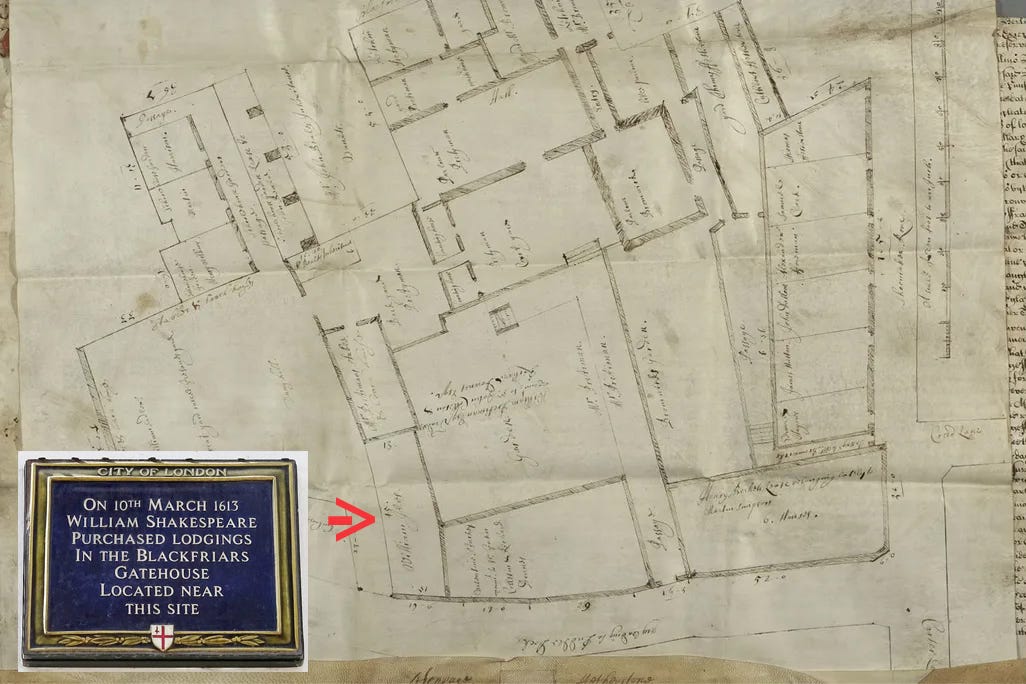
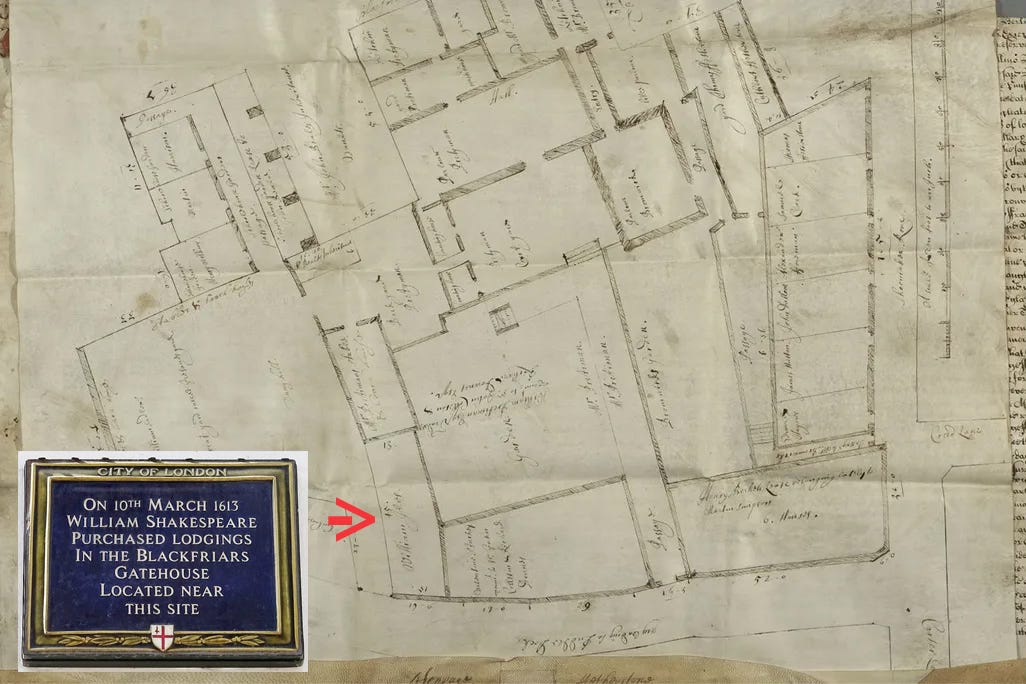
Shakespeare had a buy-to-let in buzzy, boozy Blackfriars [Times History]: The location of the Bard’s lost London home has been identified close to his theatre and a pub, raising questions about the playwright’s final years.
Pooh in pencil: sketches for original Winnie-the-Pooh book shared for first time [The Guardian]: Previously unseen preliminary pencil sketches by E H Shepard – including an abandoned study for Chapter VIII, ‘Climbing very cautiously up the stream’, and a delicate study for Chapter III – have been shared by his family to mark Winnie‑the‑Pooh’s centenary, offering a rare glimpse into Shepard’s creative process and will be shown at Peter Harrington Rare Books in Dover Street, London, from 17 April.
Campaigners seek listed status for historic trig points that mapped Britain [The Guardian]: The Twentieth Century Society (C20) has applied to Historic England for Grade II listing of the first and last trig pillars from the Retriangulation of Great Britain – the Hotine-designed pillar at Cold Ashby, Northamptonshire, built 90 years ago, and the final observation at Thorny Gale, Cumbria (used on 4 June 1962) – arguing these modest concrete ‘Hotine’ obelisks, now obsolete in the GPS era, are culturally significant landmarks of Britain’s nationwide surveying project.
ENCOUNTERS WITH LANDSCAPES
Friday 22 May • Quaker Meeting House, Central Oxford • 7–9pm
An evening of short films and discussions featuring…
Paul Whitewick, archaeology/landscape YouTuber (245,000 followers)
James Attlee, award-winning psychogeographical writer
Louise Ryland-Epton, early modern historian and John Aubrey expert
C.M. Taylor, award-winning filmmaker and writer
Notable anniversaries coming up
28 April
300 years ago... 1726: death of Thomas Pitt, English merchant and politician (born 1653)
29 April
250 years ago... 1776: death of Edward Wortley Montagu, English explorer and author (born 1713)
1 May
175 years ago... 1851: Queen Victoria opens the Great Exhibition at the Crystal Palace in London.
2 May
475 years ago... 1551: birth of William Camden, English historian and topographer (died 1623)
3 May
75 years ago... 1951: London’s Royal Festival Hall opens with the Festival of Britain.
4 May
100 years ago... 1926: The United Kingdom general strike begins.
6 May
225 years ago... 1801: Captain Thomas Cochrane in the 14-gun HMS Speedy captures the 32-gun Spanish frigate El Gamo.
60 years ago... 1966: Myra Hindley and Ian Brady are sentenced to life imprisonment for the Moors murders in England.
8 May
475 years ago... 1551: birth of Thomas Drury, English government informer and swindler (died 1603)
9 May
300 years ago... 1726: Five men arrested during a raid on Mother Clap’s molly house in London are executed at Tyburn.
225 years ago... 1801: birth of Peter Hesketh-Fleetwood, English politician, who founded the town of Fleetwood (died 1866)
Articles to read
The hilltop fort built to repel a French invasion that never came [Daily Express]: Military historian Dr Jen Howe highlights Reigate Fort – a National Trust site on Reigate Hill in Surrey built in 1898 as part of a 72‑mile, 13‑strong London Defence scheme to repel a feared French invasion – now a Scheduled Ancient Monument open to visitors with original gates, magazines and underground casemates, plus a nearby memorial to nine US airmen killed in a 1945 B‑17 crash and a mysterious WWII structure.
Wartime tunnels hidden beneath housing estate [BBC News]: HMS Forward was a once-secret Royal Navy underground command centre dug into the chalk at South Heighton near Newhaven during WWII – about 457m of tunnels carved out (some 6,000 tonnes of chalk) and staffed by Wrens to coordinate Channel shipping, radar and coastal defence – which was sealed and decommissioned in 1945, went unrecorded beneath later housing and remains inaccessible today.
Inside football founder’s seaside house [BBC News]: Southfield House in Hornsea – restored by author Sue Fraser (S.F. Taylor) – boasts a singular history that mirrors the town’s rise from a 19th-century seaside backwater to a thriving resort: built and developed by Joseph Armitage Wade, later owned by FA founder Ebenezer Cobb Morley, used as a girls’ school, and in WWII served as a convalescent home and officers’ post for Free French troops with an air-raid shelter and a Bren gun on its tower.
The Welsh church claimed by spiders and ivy: what do Britain’s derelict churches say about our health and happiness? [The Guardian]: Around half of the UK’s most important historic buildings are churches, and with falling congregations and costly repairs – often the responsibility of small local congregations – many rural and deprived-area churches are decaying; St Tyfrydog’s on Anglesey, closed in 2020, has now been vested to the Friends of Friendless Churches who plan a roughly £350,000 rescue to repair the roof, drainage and fabric so it can reopen for worship and community use.
Shipwrecks of the south coast and how to see them [BBC News]: Highlighting that Britain’s maritime past has left more than 37,000 known wrecks around England’s coastline, the piece surveys famous south‑coast losses – from the Tudor Mary Rose and the 1917 troopship SS Mendi to medieval Grace Dieu, the Swash Channel ‘Fame’, 18th‑ and 19th‑century warships including HMS Invincible, the East India Company’s Earl of Abergavenny and HMS Pomone – and explains how they are studied, displayed or visited via museums, guided dives, boat trips and interactive maps while many are legally protected as archaeological sites or war graves.
⭐️ Paying subscribers can read 17 further news stories below!
Plus, if you’re into archaeology, folklore and landscape stories, read my other, free newsletter…

