
Welcome to UK History News. In each fortnightly issue, free subscribers will receive the latest British history-related headlines, along with notable upcoming anniversaries. And below the paywall, paid subscribers will see many more news items, all of them briefly summarised here in one place.
Top headlines
‘A temple of food’: London’s grande dame Simpson’s in the Strand rises again [The Guardian]: On its bicentenary, the storied Simpson’s in the Strand – closed since early Covid – is reopening under veteran restaurateur Jeremy King, who plans to restore its Edwardian grandeur and historic traditions while revitalising a once-faded London institution for modern diners.
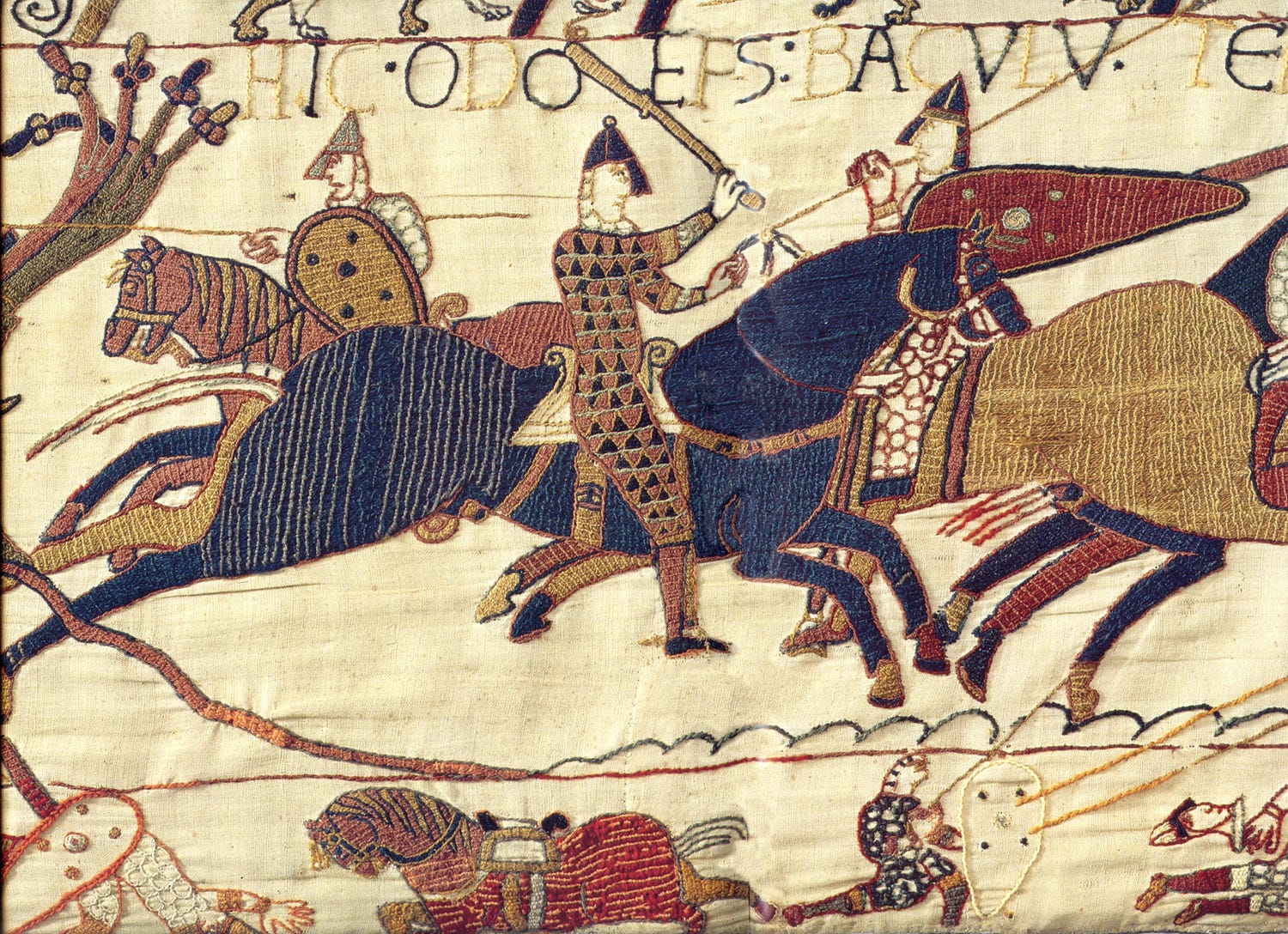
British Museum announces ticket sales dates for Bayeux Tapestry exhibition [The Independent]: Tickets go on sale on 1 July for the Bayeux Tapestry’s first UK display in nearly 1,000 years at the British Museum – the 70‑metre medieval embroidery depicting the 1066 Norman invasion is expected to draw millions (the museum forecasts 7.5 million visitors) across staggered viewing periods from September through 2027 before returning to Bayeux.
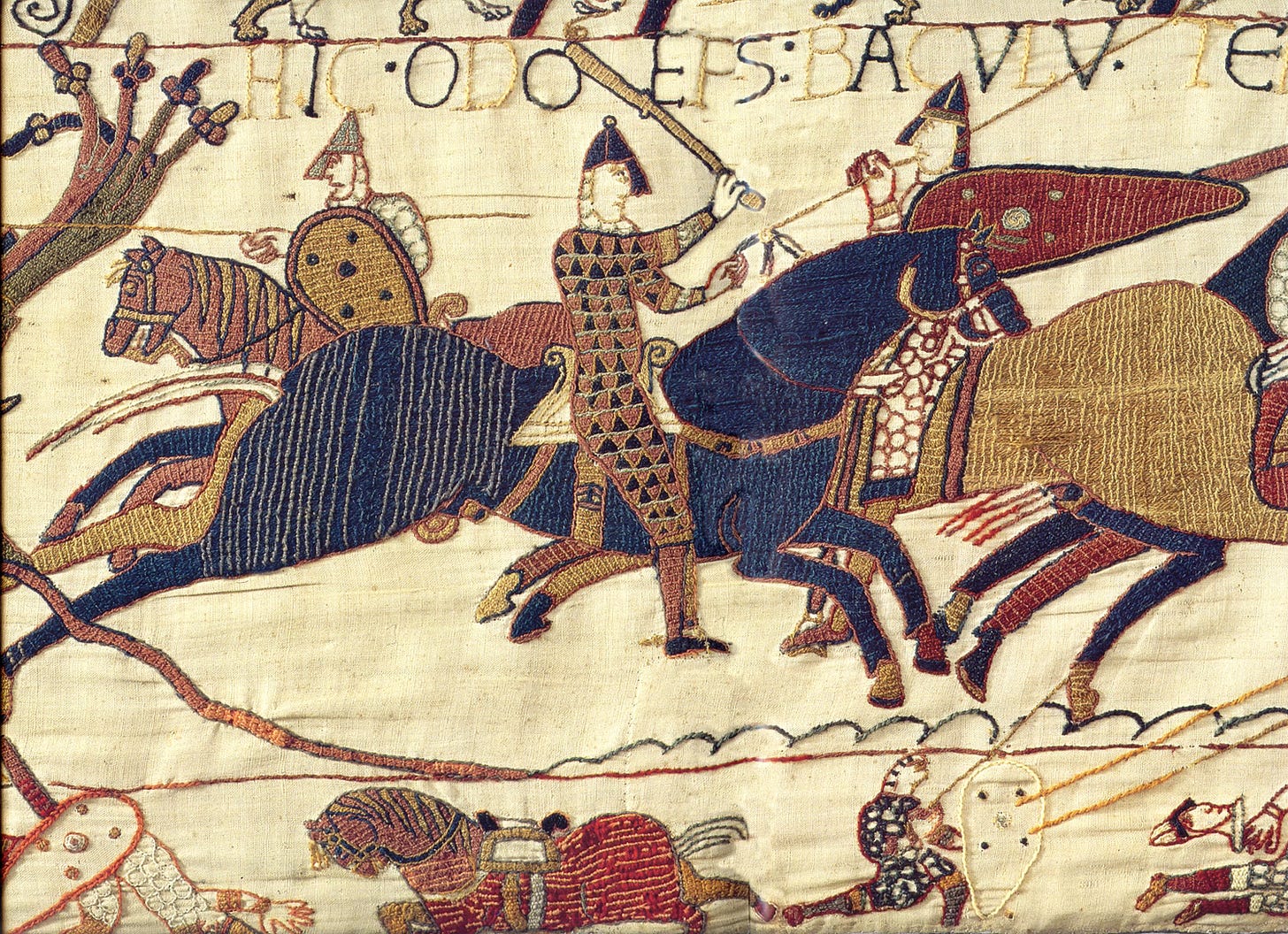
Celebrating town’s replica of the Bayeux Tapestry [BBC News]: Reading’s 140-year-old replica of the Bayeux Tapestry – stitched by about 40 mostly Staffordshire women and bought for the town in the 1890s – has become part of Reading’s ‘DNA,’ museum staff say, and with the original (insured for about £800m and long debated for its nude figures) due to be loaned to the British Museum from September, attention has returned to the replica’s omission of some nude details after embroiderers worked from censored images and to celebrating the overlooked role of women in the tapestry’s story.
Is the UK’s golden era of free museum entry coming to an end? [The Guardian]: Facing an £8.2m shortfall and wider sector cuts, the National Gallery’s latest financial crisis has reignited debate over the UK’s 25‑year free‑entry policy – propelled by Treasury and Hodge‑review suggestions to charge visitors – pitting advocates who say targeted fees could raise revenue and reduce overcrowding against unions, cultural bodies and thinktanks who warn charges would damage access, tourism and cultural equity amid chronic underfunding.
Tracey Emin urges those who can afford it to pay for museum entry [Arts Professional]: Speaking at the launch of her Tate Modern show, Dame Tracey Emin urged wealthier visitors to buy museum memberships and make voluntary donations to help keep national museums free amid funding shortfalls, and as a British Museum trustee she called for the institution to modernize while warning that artifact restitution is complex.
A couple walking their dogs noticed 2,000-year-old footprints on the beach. [smithsonianmag.com]: Archaeologists raced to document the semi-fossilized tracks in eastern Scotland. They were likely made by humans, deer and other animals during the late Iron Age
Spirit of the Blitz: how British museums are preparing for a new war [Times]: Cultural institutions are drawing up battle plans to save the nation’s treasures should conflict break out, with the help of blueprints from 80 years ago.
Last surviving teacher of Aberfan disaster still remembers faces of the children who died [BBC News]: Sixty years after the Aberfan colliery spoil tip collapse that killed 116 children and 28 adults, 84‑year‑old former Pantglas teacher Mair Morgan – the last surviving teacher from the school – recalls the lasting trauma of being asked to identify victims’ bodies, the personal losses and emergency response, corrects myths about that morning, and urges that the lessons on industrial waste safety not be forgotten.
Cannon dug up during city centre work [BBC News]: Construction workers restoring Queen’s Gardens in Hull unearthed an 8.5ft cast-iron cannon – possibly dating from the late 17th to 18th century and found about 1.5m underground – that is being examined by archaeologists and may have been used for port defence or as a mooring post.
Could this be wreckage from a 214-year-old maritime disaster? [BBC News]: Storm-driven sand shifts at Ballymastocker Bay have revealed timbers that may be the starboard bow of HMS Saldanha – a 36‑gun Royal Navy frigate that foundered with all 253 crew in December 1811 – and archaeologists working with the National Monuments Service have begun recording and analysis to confirm the identification.
Viking invader’s gold coin pendant found in field [BBC News]: A metal-detectorist unearthed an unusually fine gold pendant – an imitation of a rare Louis the Pious (c.814) solidus likely lost by a soldier of the Viking Great Army – in a field at Elsing, Norfolk, in September 2024; the find (one of about 22 such imitations recorded in Britain) is going through the treasure process and Norwich Castle Museum hopes to acquire it.
Time capsule found during town hall restoration [BBC News]: A time capsule dating from the 1850s was uncovered during restoration of Middlesbrough’s Grade II-listed Old Town Hall, containing signed documents – including one from former mayor and MP Isaac Wilson and a foundation document for the clock tower signed by iron-industry figure and ex-mayor John Vaughan – which Labour Mayor Chris Cooke said have been rescued and will be preserved and shown to councillors as the £6.3m, 12-month refurbishment (including clock tower restoration and conversion to offices) proceeds on the building opened in 1846 and last used as a library and community centre until 1996.
Conservation funds secured for rare church frescoes [BBC News]: Initial restoration work funded by a £244,684 National Lottery Heritage Grant will begin in April on rare, high‑quality 12th‑century frescoes – depicting Christ’s Passion and accompanied by a 14th‑century Doom painting – uncovered at St Mary Magdalene’s Church in Ickleton after a 1979 arson attack, with full fresco conservation planned after roof and window repairs to protect against bats and moisture.
Hunt for executed 19th century murderers thought to be buried under council car park [BBC News]: Specialist ground-penetrating radar has been used to scan the car park at Carmarthenshire County Council – built on the site of the demolished 19th‑century Carmarthen Gaol – searching for the remains of five men executed between 1818 and 1894, with the data sent to Italy for analysis and the council saying it will not disturb any discoveries.
We’ve invested £10million to revitalise historic places and bring communities closer to their heritage [The National Lottery Heritage Fund]: The National Lottery Heritage Fund announced funding for seven UK projects – including a £2.3m grant to transform Glasgow’s Sauchiehall Street and preserve the McLellan Galleries, plans to convert Newham’s Grade II-listed Old Library into a heritage centre, a culture and heritage strategy for Barking and Dagenham, and a £62,000 award to progress repair plans for Grimsby’s former House of Fraser – continuing its 30-year, £3.4bn programme to conserve more than 10,600 historic buildings and increase community access to heritage.
Notable anniversaries coming up
4 March
60 years ago... 1966: In an interview in the London Evening Standard, The Beatles’ John Lennon declares that the band is “more popular than Jesus now”.
5 March
80 years ago... 1946: Cold War: Winston Churchill delivers his famous “Iron Curtain” speech at Westminster College, Missouri.
6 March
200 years ago... 1826: birth of Annie Feray Mutrie, British painter (died 1893)
7 March
150 years ago... 1876: Alexander Graham Bell is granted a patent for an invention he calls the “telephone”. (See also below.)
8 March
300 years ago... 1726: birth of Richard Howe, 1st Earl Howe, English admiral and politician, Treasurer of the Navy (died 1799)
9 March
250 years ago... 1776: Scottish philosopher Adam Smith publishes The Wealth of Nations, ushering in the classical period of political economy.
80 years ago... 1946: Bolton Wanderers stadium disaster at Burnden Park, Bolton, England, kills 33 and injures hundreds more.
10 March
150 years ago... 1876: The first successful test of a telephone is made by Alexander Graham Bell.
200 years ago... 1826: birth of John Pinkerton, Scottish antiquarian, cartographer, author, numismatist and historian (born 1758)
11 March
80 years ago... 1946: Rudolf Hess, the first commandant of Auschwitz concentration camp, is captured by British troops.
12 March
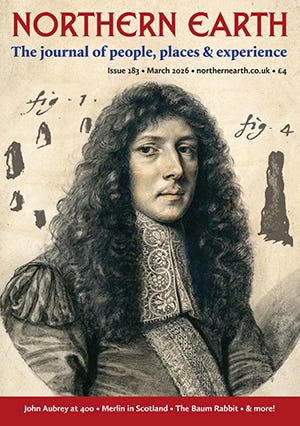
400 years ago... 1626: birth of John Aubrey, English historian and philosopher (died 1697)
For more on Aubrey and his work, check out the latest issue of Northern Earth, the long-running little quarterly which I edit…
Articles to read
The mysterious gothic tower standing above Arundel [BBC News]: Hiorne Tower is a late-18th-century triangular Gothic folly in Arundel Park, built by architect Francis Hiorne around 1787–90 as an ornate showpiece to win the commission to rebuild Arundel Castle – a bid that failed, leaving him impoverished – after which the tower served as a 19th-century lookout and later a beloved walking landmark with ghost stories and even a Doctor Who filming appearance.
The village mill behind a breakfast revolution [BBC News]: On the outskirts of Salfords, Surrey, a 19th-century mill beside a stream – rebuilt and run by Seventh-day Adventists and reportedly influenced by Dr John Harvey Kellogg – was, according to local oral history, England’s first wheat-to-breakfast-cereal operation before burning down in 1900, and today the site is occupied by the Mill House restaurant.
T rex breath and Queen Elizabeth’s car: scientists creating ‘time machine for the nose’ [Museums | The Guardian]: Drawing on the ‘archaeology of the senses,’ historians, scientists and perfumers are using chemical analysis, archival research and modern olfactory equivalents to recreate ancient and historical smells – from Egyptian mummification balms to the late Queen’s Rover interior and St Paul’s library – so museums can offer research-based, sensory experiences that make the past tangible, educational and preservable.
⭐️ Paying subscribers can read 39 further news stories below!
Plus, if you’re into archaeology, folklore and landscape stories, read my other, free newsletter…

